
Beyond the Entrances: The Race for Context in Shopping Centers
A shopping center measures who comes in. The value is in what happens next: between floors, corridors and store fronts. The architecture that measures it will separate the leading operators from the rest.
Most shopping centers know how many people walked through their doors and how much each tenant reports in sales. With that data they set rents, plan marketing and answer tenants. When something changes inside the center, those two numbers cannot say what or where.
What matters sits between the entrances and the stores: how people move between floors, which corridors gain or lose flow and which store fronts capture visitors. Measuring it across 50,000, 100,000 or 300,000 m² is the challenge that decides which architecture works.
Why does a floor lose visits if total traffic holds steady?
It is a typical question for a shopping center and impossible to answer with entrance counts. The doors confirm that the same number of people came in. Tenants on one floor report fewer visits. What happened inside, and when it started, remains invisible.
Without that information, tenants question the traffic, the location value per m² is set without evidence and layout decisions are made by intuition.
In a shopping center, the entrance count is the start of the question, not the answer.
Three types of shopping center operators
Counters at the entrances
Dedicated sensors at the doors of the center.
Total traffic only. Cannot explain floors, corridors or stores.
LimitedSmart cameras per corridor
AI devices installed in floors, corridors and escalators.
Too many expensive points to cover the whole center.
Does not scaleAI as software on the CCTV
AI that turns the video from the center's existing cameras into data.
Flow between floors, capture per store, data shared with tenants.
ScalesThe old model: counters at the doors
Entrance sensors solved the question of how many people came in. Their limit is not only coverage: in a published case, replacing them with KSI revealed 20% more real visitors that the sensors were not counting.
The trap: smart cameras in every corridor
Covering floors, corridors and escalators with AI cameras multiplies expensive devices for every analytics point. In a center of 50,000 m² or more, that model cannot reach full coverage, and the AI stays frozen at the version that came with each device.
What the leading operators do
They turn the CCTV the center already has into a perception layer. AI runs as software to measure flow between floors, unique visitors and capture per store, and the data is shared with tenants and connected to the agents of the leasing and operations teams.
Why only one architecture covers an entire center
Counters at the entrances, with or without AI
- Total traffic only
- Duplicated maintenance next to the CCTV
- Vendor lock-in
- Innovation in the vendor's hands
Smart cameras in every corridor
- Up to USD 1,000 per camera
- Cannot cover a 50,000 m² center
- Obsolete in about 5 years
- Vendor lock-in
AI as software on the existing CCTV
Cameras from USD 50- Flow between floors and zones
- Capture per store
- Data shared with tenants
- Evolving AI by software
- Agentic connection via MCP
- Several vendors on the same cameras
In real projects, KSI has validated a difference of 10x or more compared with dedicated hardware: lower infrastructure cost and more analytics coverage for the same budget.
Real case: the same question, with and without data from inside
A shopping center in South America reversed the direction of two escalators between Level 1 and Level 2. Total traffic held steady, but Level 2 started receiving fewer visits. The question to an AI assistant was the same in both cases: why does Level 2 receive fewer visits if total traffic held steady? In the second case, the assistant could query KSI data through MCP, an open standard that connects AI assistants to external data sources.
Entrance counts only
"It is not possible to know what changed."
With KSI connected via MCP
People going up to Level 2 by escalator, per 100 visitors, per week
Two escalators were reversed on 28/9. Since then, fewer people go up to Level 2.
With the camera data, the assistant sees the flow between floors week by week: after the change, 8.2% fewer people went up to Level 2 and 7.4% more came down. That is why the floor receives fewer visits, and the answer arrives with the cause and the moment it started.
What other shopping centers achieved
20% more real visitors from day one
A group of shopping centers replaced its counting sensors with KSI and ran both systems in parallel. A manual audit with the security camera footage validated the result: KSI counted with an error below 0.5%, and traffic turned out to be 20% higher than the sensors reported. Adjusting the real traffic increased the value of the commercial spaces.
more real visitors detected from the first day
operating cost (OPEX) compared with traditional sensors
counting error, audited manually
From security cameras to data for tenants
A shopping center that used its cameras only for security turned them into a source of commercial data: flow by corridor, capture and conversion per store, compared by category. Each tenant started receiving automatic reports with concrete improvement opportunities.
increase in sales conversion
of tenants with proactive reports
of tenants use the platform weekly
cheaper than traditional sensors
What agents add in a shopping center
With KSI data connected via MCP, the AI assistants of the leasing, marketing and operations teams will be able to answer questions about the center in natural language:
- Which corridors gained or lost flow after the last layout change?
- Which store fronts capture fewer visitors than others in their category?
- Did the weekend marketing activity take more people to the upper floors?
- Which entrance should be reinforced on Saturday afternoon, based on history?
Frequently asked questions
No. KSI is software that works on the CCTV already installed, of any brand or model. Where an extra viewpoint is needed, standard cameras are available from USD 50.
In a published case, KSI counted with an error below 0.5%, audited manually with the security camera footage, and detected 20% more real visitors than the previous sensors.
Yes. In a published case, every tenant received automatic reports on capture and conversion with concrete improvement opportunities.
Yes. KSI interprets behavior, not people: no facial recognition, no image storage and compliance with GDPR.
See how KSI will measure your whole center with the cameras you already have
Related articles
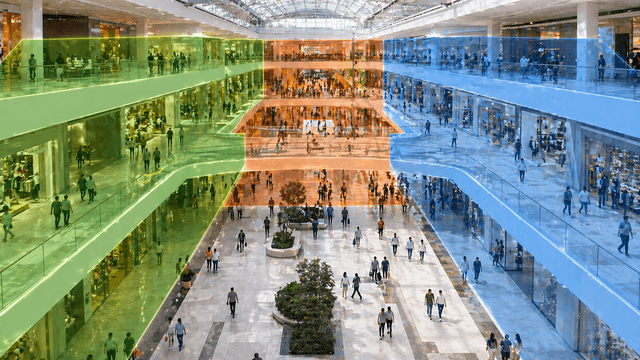
People Counting in Shopping Centers: What to Measure Beyond Total Footfall
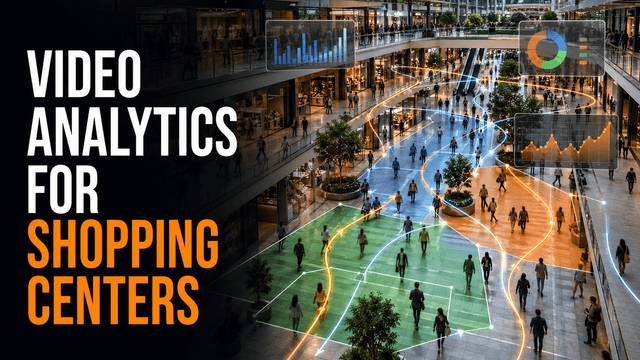
Complete Guide: Video Analytics for Shopping Centers in 2026
Every Minute in a Queue Counts: The Race for Context in Airports
KSI News!