
Just Retail: Retail doesn't need more AI. It needs to give it eyes inside the store
Trade outlet Just Retail interviews Gonzalo Carozo, CEO and co-founder of KSI Vision, on why the next leap for physical retail is not more AI, but visibility into what happens inside the store.


Retailers already use AI assistants to analyze sales, traffic, and conversion. But when conversion drops, the assistant can say how much, not why: the explanation lies inside the store, and it has no data there. KSI Vision, a video analytics company, turns the security cameras already installed into anonymous data about what happens in the space (zones, dwell time, queues, fitting rooms, and occupancy) and connects it directly to the assistants teams already use. Gonzalo Carozo, CEO and co-founder of KSI, explains why the next leap for physical retail is not having more AI, but giving it eyes inside the store.
What changes in retail with the arrival of AI agents?
It stopped being a pilot. Many teams already ask an assistant how a store or a campaign performed and get the answer in seconds, combining sales, traffic, and conversion. What used to be a monthly report is now a conversation.
But that exposes a limit: the assistant can say that Saturday's conversion dropped three points. What it cannot say is why. The explanation lies in what happened inside the store: where people stopped, which zone they ignored, how long they waited at checkout or at the fitting rooms. And until now, there was no data on that.
Why does an AI agent need that context?
An agent is only as good as the information it receives. In e-commerce, that context has existed for twenty years: every click, every page visited, and every abandoned cart is recorded. That is why AI advanced so quickly there. In the physical store, the agent knows the beginning and the end of the story, who came in and what was sold, but not the story itself.
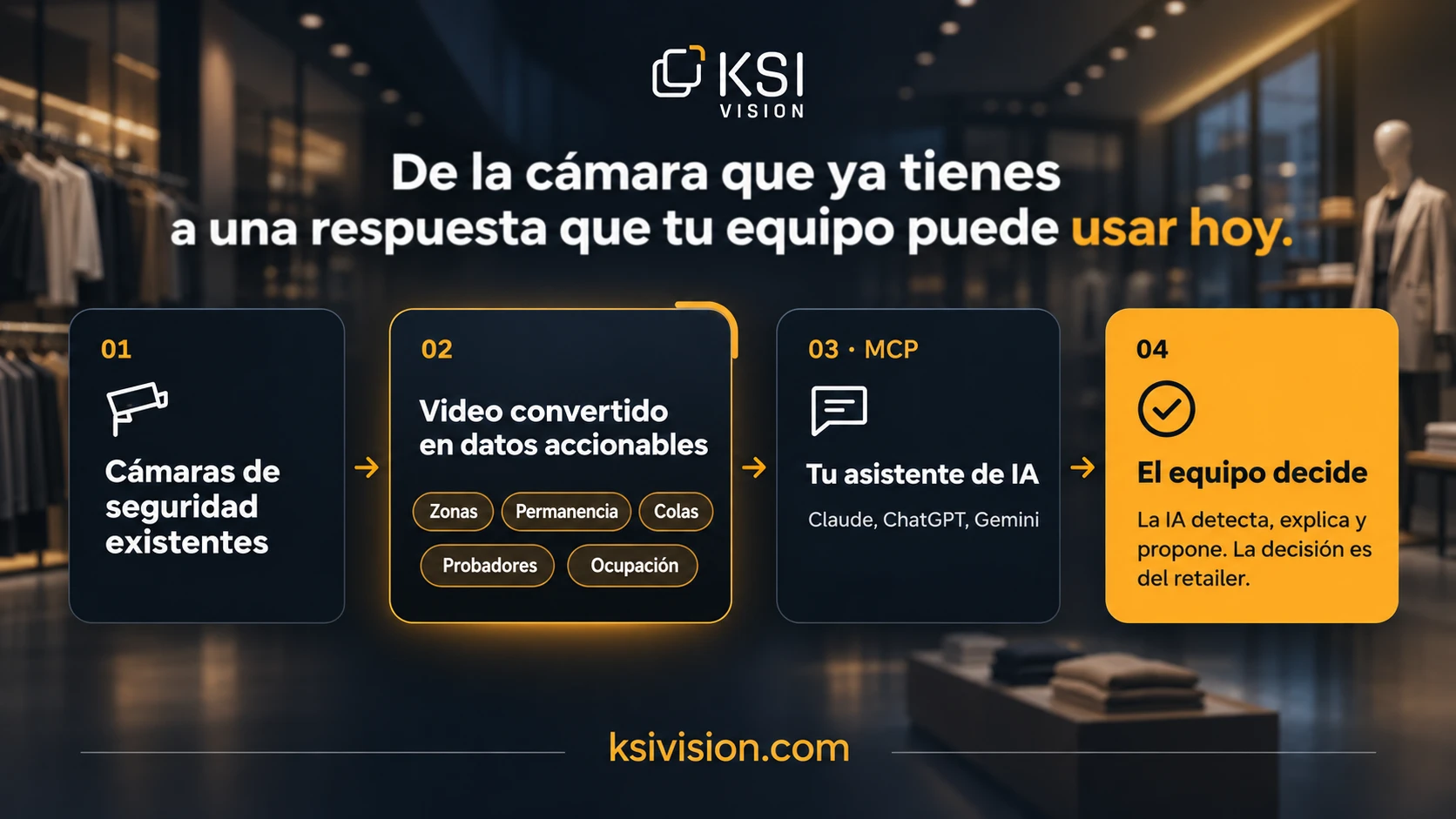
That is what we solve at KSI Vision. Our software connects to the security cameras that stores and shopping centers already have installed and turns what happens inside the space into anonymous data that an agent can read and use. We work in Europe and Latin America with retail brands, shopping center groups, airports, and supermarkets, such as Mango, Grupo Falabella, Grupo Cencosud, Corporación América Airports, Grupo Axo, Grupo Lecueder, Tienda Inglesa Supermarkets, Arredo, Kinko Supermarkets, and CBRE, among others.
What data is physical retail missing today?
Retailers know a lot about those who buy: what they bought, how much they spent, at what time, and how they paid. But in a typical fashion store, out of every ten people who walk in, eight leave without buying. Almost nothing is known about those eight: what they were looking for, where they stopped, at what moment they decided to leave. They are most of a store's demand, and they are its great blind spot.
A simple count confirms that they came in, and the POS shows how many bought. But that measures the size of the blind spot, not what is inside it. In e-commerce, that 80% has a name, the abandoned cart, and every store knows at which step it loses it. In the physical store, nobody knew, until now.
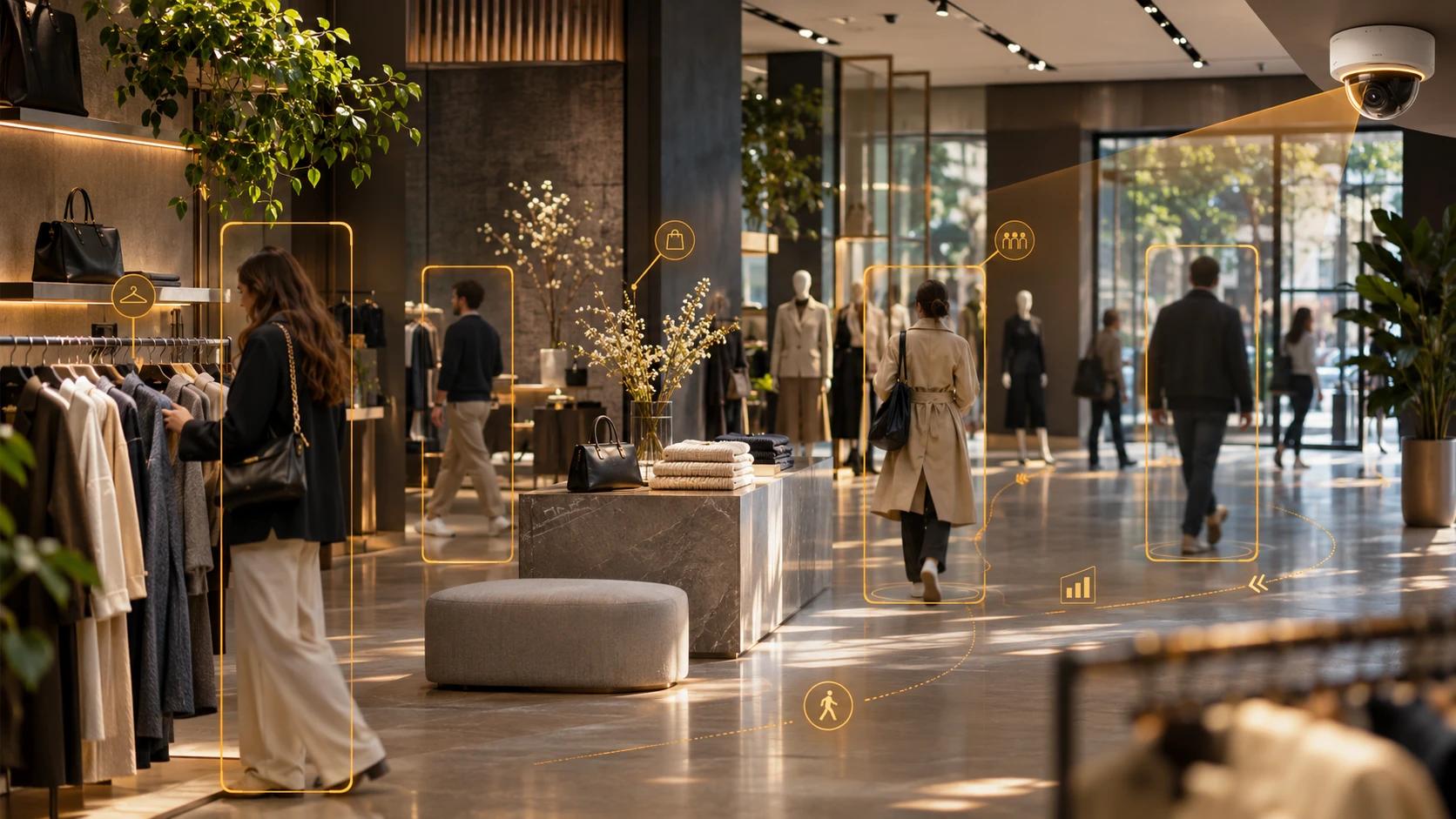
That is what we measure at KSI: what happens inside the store with those who do not buy, where they walk, which zones they ignore, how long they wait at checkout or at the fitting rooms, when they leave. Always anonymously: we don't know who they are, we know what happened to them.
What does it look like in practice?
Our data connects to Claude, ChatGPT, Gemini, and other assistants through MCP, a standard connector. The team asks in natural language and gets the answer with real data, without dashboards or intermediate reports. A store manager can start the day knowing what happened yesterday and what to change today.
In Spain, a store chain was losing hundreds of thousands of euros a month to purchase abandonment in its largest stores. With KSI data and support from its AI assistants, it redesigned the layout, matched staffing to footfall peaks, and activated real-time alerts. That is how it recovered 15% of monthly sales per store.
In LATAM, a supermarket in Uruguay had saturated checkouts every Sunday. With real-time alerts and a forecast based on its history, it reorganized its staff and the saturation disappeared.
The underlying change is cultural: data stops being something you look at to account for results and becomes something you use to decide.
Who is in control: the AI or the retailer? And how is privacy guaranteed?
The retailer, always. The AI detects, explains, and proposes, but the decision belongs to whoever knows the business. An agent may suggest adding staff on Saturday; the manager knows whether that is possible or whether there is a better solution.
As for privacy, we interpret behavior, not people. The system does not identify anyone, does not perform facial recognition, and does not store images. It turns what the camera sees into anonymous, aggregated data: flows, times, and occupancy. We designed the technology from the start to comply with the GDPR, and we work with that same standard in Europe and Latin America.
How do you see this shift in Spain compared with Latin America?
In Spain, many chains and shopping centers already have years of footfall data and teams used to working with indicators. For them, the agentic leap is natural: going from looking at the data to having AI interpret it and propose actions. In Latin America, there are operators that are still starting to measure, and that has an advantage: they can skip stages and go straight to a model in which data and agents work together from day one.
In both cases we see the same thing: the physical retailer that gives its agents eyes will decide better and faster. The one that does not will keep managing the store by looking in the rear-view mirror.
Give your AI visibility inside your spaces
See how KSI Vision turns the cameras you already have into data your team and your AI assistants can use.
Request a demoRelated articles


KSI News!